What is Return on Feeling™ and why it's more important to business than return on investment.
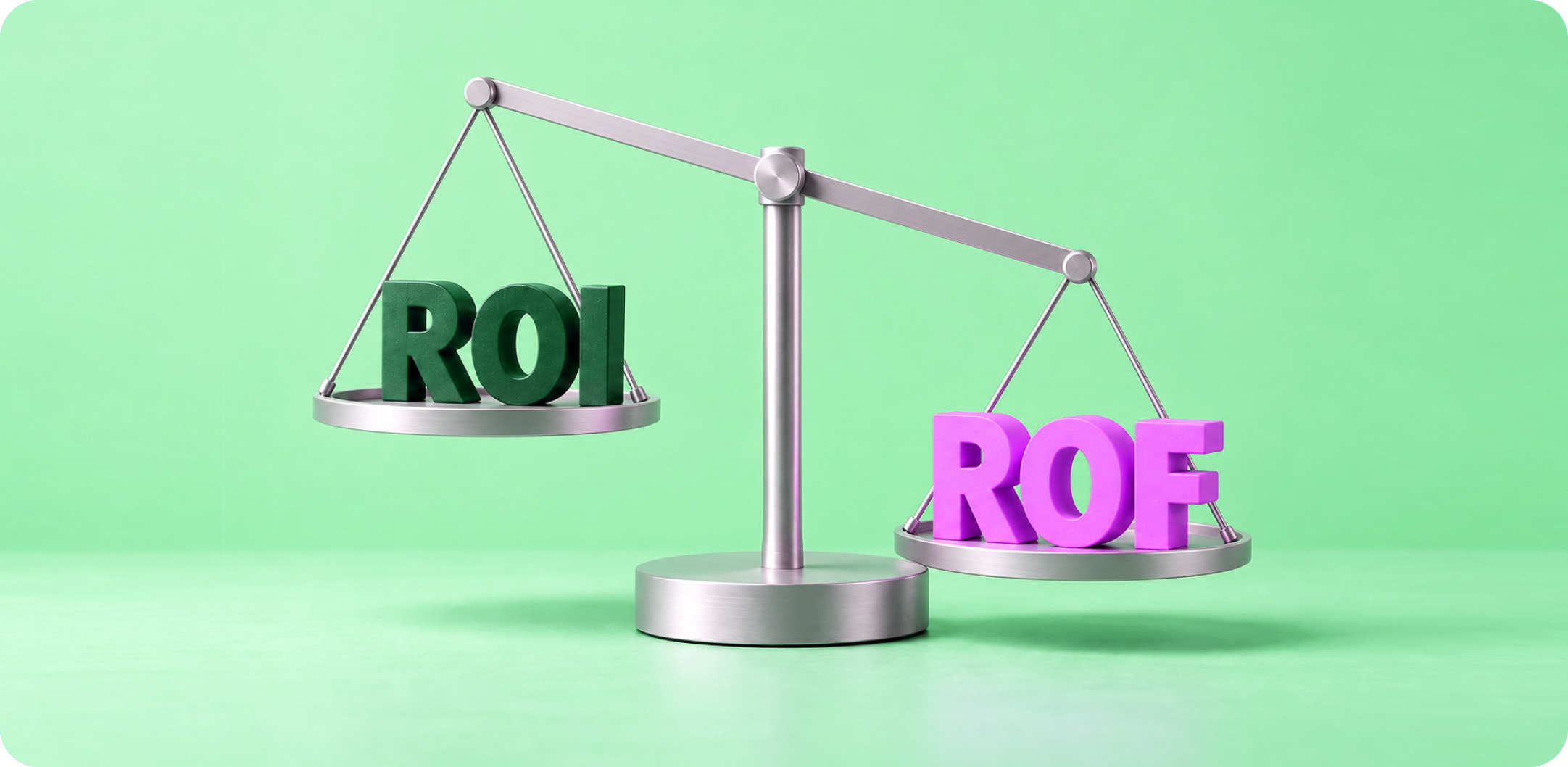
Business loves a return.
Return on investment. Return on ad spend. Conversion rates. Lifetime value. Acquisition cost. We measure what went in, what came out and whether the whole thing was worth doing. But there’s a step in the middle that I think we routinely underestimate.
Feeling.
Before somebody buys from you, recommends you or comes back for more, they usually feel something about you. They might feel excited by what you offer. They might feel understood after talking to you. They might simply feel that dealing with you will be easier than dealing with the other lot.
And that feeling can change what happens next.
I call the value created in that middle bit Return on Feeling™ or ROF
It asks two questions: What did we make people feel? And what did that feeling make possible?
Because if feeling influences behaviour, it isn’t sitting outside the commercial equation. It’s sitting upstream of it.
Oracle’s research into humour and customer experience gives us a rather good example. When brands successfully use humour, 80% of people say they’re more likely to do business with them again, 80% say they’ll recommend them and 63% say they’ll spend more.
That doesn’t mean a funny advert automatically puts 63% more revenue in the till. These are people describing what they’re more likely to do, and humour is only one way to create a positive feeling. But the connection is hard to ignore: when an experience makes people feel good, they become more open to doing business with you again.
And it needn’t be the big, obvious sort of joy. For someone making an expensive or difficult decision, the feeling that matters might be relief. For a client who’s been let down before, it might be the quiet pleasure of realising you actually did what you said you would. Sometimes joy looks like a grin. Sometimes it looks like somebody finally relaxing their shoulders.
That’s why I think businesses need to take affectivity as seriously as effectivity.
Effectivity asks: Did it work?
Affectivity asks: How did it make people feel?
ROF™ is where we begin connecting the answers. If people felt understood, did the sales conversation become easier? If the experience felt reassuring, were they happier to commit? If they enjoyed working with you, did they come back or tell somebody else?
Those questions won’t produce one magical joy score. People are inconveniently more complicated than that. But they do give us something useful to look for beyond the final number on a dashboard.
Affective Advantage™ is the competitive edge you create when people feel something distinctive about your business. ROF™ asks whether that feeling is changing what they do.
That matters because not every joyful idea is a good business idea. Something can be hilarious and commercially useless. It can make people smile while making the buying experience harder. It can win an award and do absolutely bugger all for the business.
I’m interested in the joy that earns its keep.
So pay attention to what customers mention without being prompted. Watch whether referrals rise, whether people return and whether the sales conversation gets easier. Ask employees how confident they feel representing the brand. Some of those signals are measurable; others take a proper conversation to understand. Both can tell you something valuable.
ROI still matters. Of course it does. But if we only look at the money at the end, we risk overlooking the feeling that helped bring it in.
So perhaps the next time we ask, “What was the return?”, we should ask one question first.
What did we make people feel and what did that feeling make possible?
That’s Return on Feeling™.
....
I’m Sean Cornell, Founder and Brand Enjoyneer™ at Wonderment, the seriously joyful branding agency. I make businesses more effective by making their branding more affective, transforming fundamental businesses into wondermental brands.
If you’re serious about starting the joyvolution in your sector, we should talk.


Subscribe to Wonderfuel
Your fortnightly spark of Strategic Joy™, landing in your inbox every Moanday morning. Because joy isn't a reward for getting through the week it's what gets you through it. No hacks. No homework. Just one idea engineered to mess with the gloom.