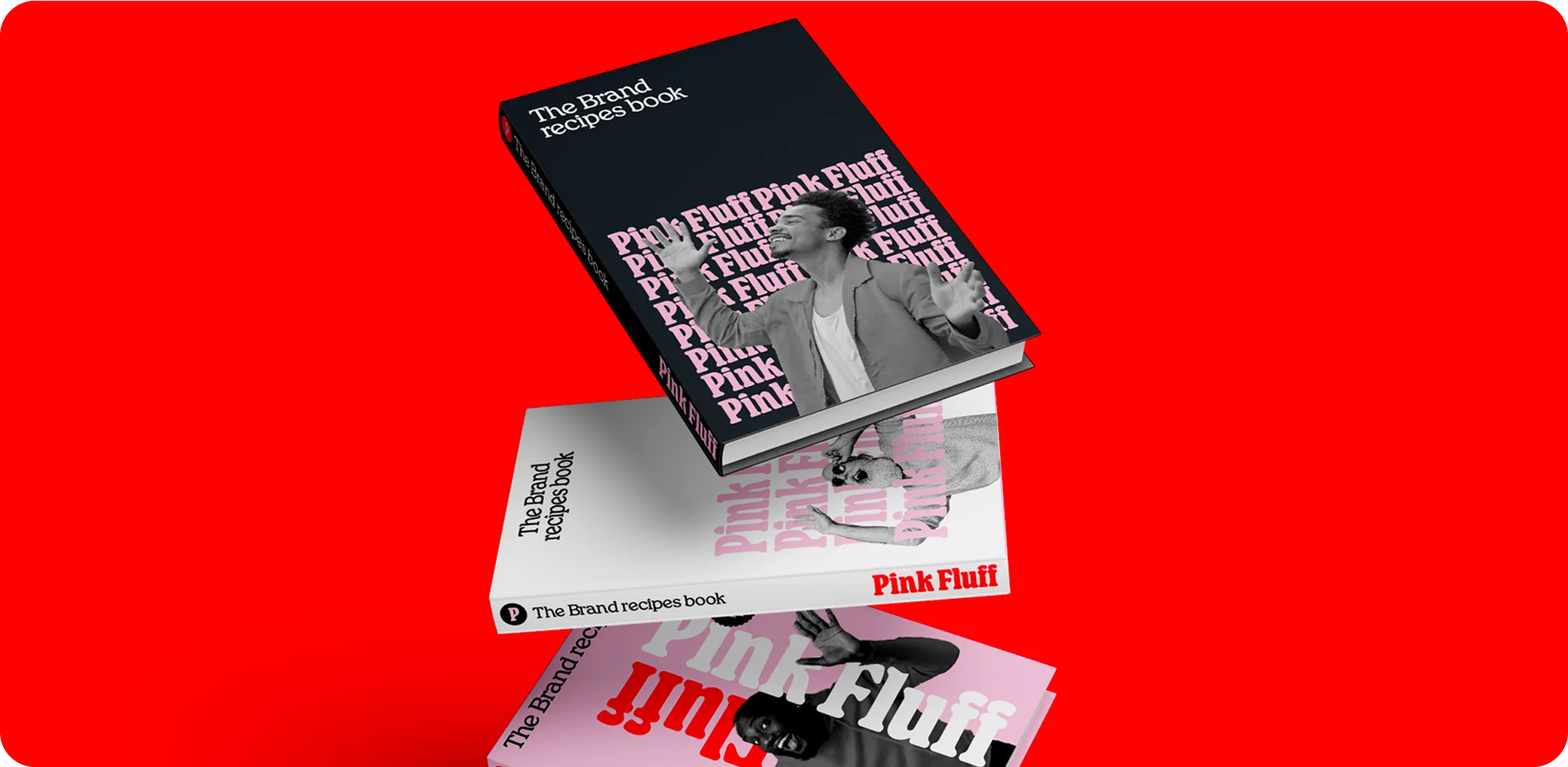
Out with the Brand Guideline Book and in with the Brand Recipe Book
Let’s be honest.
Most brand guideline books mean well. They really do. But they are obsessed with control.
Logo must be this big. Button must be that colour. Never do this. Ever.
They treat brands like fragile museum artefacts, with white gloves on, alarms everywhere and an unspoken instruction that says 'please do not touch'.
And somewhere along the way, the brand stops breathing.
Because brands do not fail because people are too creative.
They fail because people do not know what actually matters.
So we add more rules, more pages, more policing, all with the same unspoken message. We do not quite trust you, so let’s lock this down.
That is usually the moment the joy leaves the room.
Brands do not break because people are creative.
They break because no one ever knows what really matters.
What absolutely must stay consistent. What can flex without fear. What simply does not belong.
When everything is treated as sacred nothing stands out and when nothing is prioritised everything gets diluted.
So people guess. And guessing is where drift begins.
Confusion causes inconsistency, not freedom.
A brand is not a layout. It is a living system.
A logo is not a brand. A website is not a brand. A campaign is not a brand.
They are expressions.
A brand, when it is doing its job properly, is a repeatable decision making system, one that works across time, channels and teams and one that still holds together when we am not in the room explaining it.
If a brand only works when it is tightly controlled it is not strong.
It is brittle.
This is where Ingredients and Recipes changed everything for me.
This way of thinking was conceived by Rachel Fairley and documented in the book Rebrand Right, written with co-author, founder of Brand Strategy Academy Sarah Robb and it stopped me in my tracks.
Because it gave structure to something I had felt for years but never quite named.
Brands do not need tighter rules. They need clearer thinking.
So instead of brand guidelines it gives us Ingredients and Recipes, and honestly once you see brands this way it is very hard to unsee it.
Ingredients are what must always be true.
Not everything. Just the right things.
Some assets are non negotiable and they show up every time. Some are optional and chosen with intent, not habit. And some simply do not belong.
This creates hierarchy. It creates clarity. It gives people confidence.
And suddenly the conversation changes.
We stop asking, do you like it and start asking, is this using the ingredients properly.
That one shift removes most brand chaos almost overnight.
Recipes are where creativity gets its confidence back.
This is the bit people love once they experience it.
Recipes are not restrictions. They are permissions.
They tell teams how far they can push, what combinations are fair game and how to do something new without losing themselves.
Recipes do not kill creativity. They aim it.
Because consistency does not come from sameness. It comes from logic.
Same ingredients. Same intent. Different expressions. Still unmistakably on brand.
Why this matters now really.
Brands do not live in tidy little brand books anymore. They live everywhere, all at once, at speed.
Different platforms. Different people. Different pressures.
Rigid rule based systems collapse under that reality. They always have.
Systems built on principles adapt. They stretch. They evolve. They stay recognisable.
As Rebrand Right puts it, assume the best of people’s talent not the worst.
That feels like a much healthier starting point.
And this is where the old brand book quietly dies.
The 200 page PDF brand guideline is a relic. Heavy. Static. Out of date almost the moment it is signed off.
It lives in a folder no one opens and gathers digital dust while the brand moves on without it.
Ingredients and Recipes demand something different.
They want to live. They want to be used. They want to be close to the work.
Which is why this approach naturally moves brands away from bloated PDFs and towards digital brand delivery platforms.
Instead of documenting a brand, we embed it.
Ingredients can live directly inside the tools teams already use. In Canva. In Figma Buzz. In Affinity.
Logos. Type. Colour. Templates. Recipes ready to go.
No interpretation required. No policing needed. No 200 page manual to decode before anyone can create.
And here is the quiet bonus no one talks about enough.
This is far more cost effective.
Less time producing documentation no one reads. Less time correcting mistakes. Less dependency on external designers for every single thing.
More consistency. More confidence. More momentum.
The brand stops being a document and starts being a working system.
So what does this look like in practice.
Pink Fluff HR Consultancy. Less paperwork, more people work.
Pink Fluff did not need a brand to control people. They needed a brand that people could use.
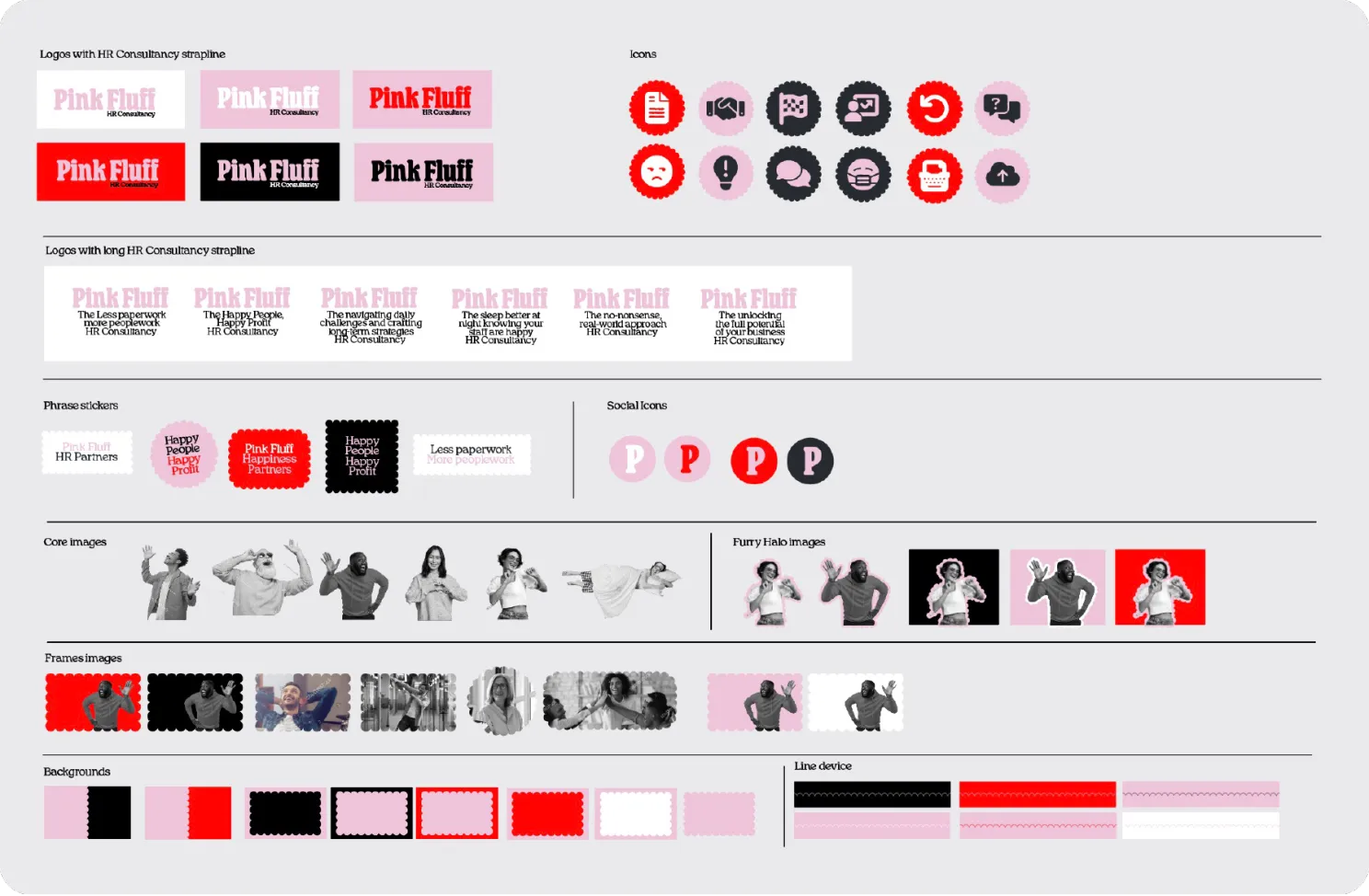
So we did not start with layouts or guidelines. We started by defining the ingredients.
Logos variations with and without straplines, phrase stickers, icons, core people images , halo people images, frames, backgrounds and line devices.
These are the elements that are always used or optional.
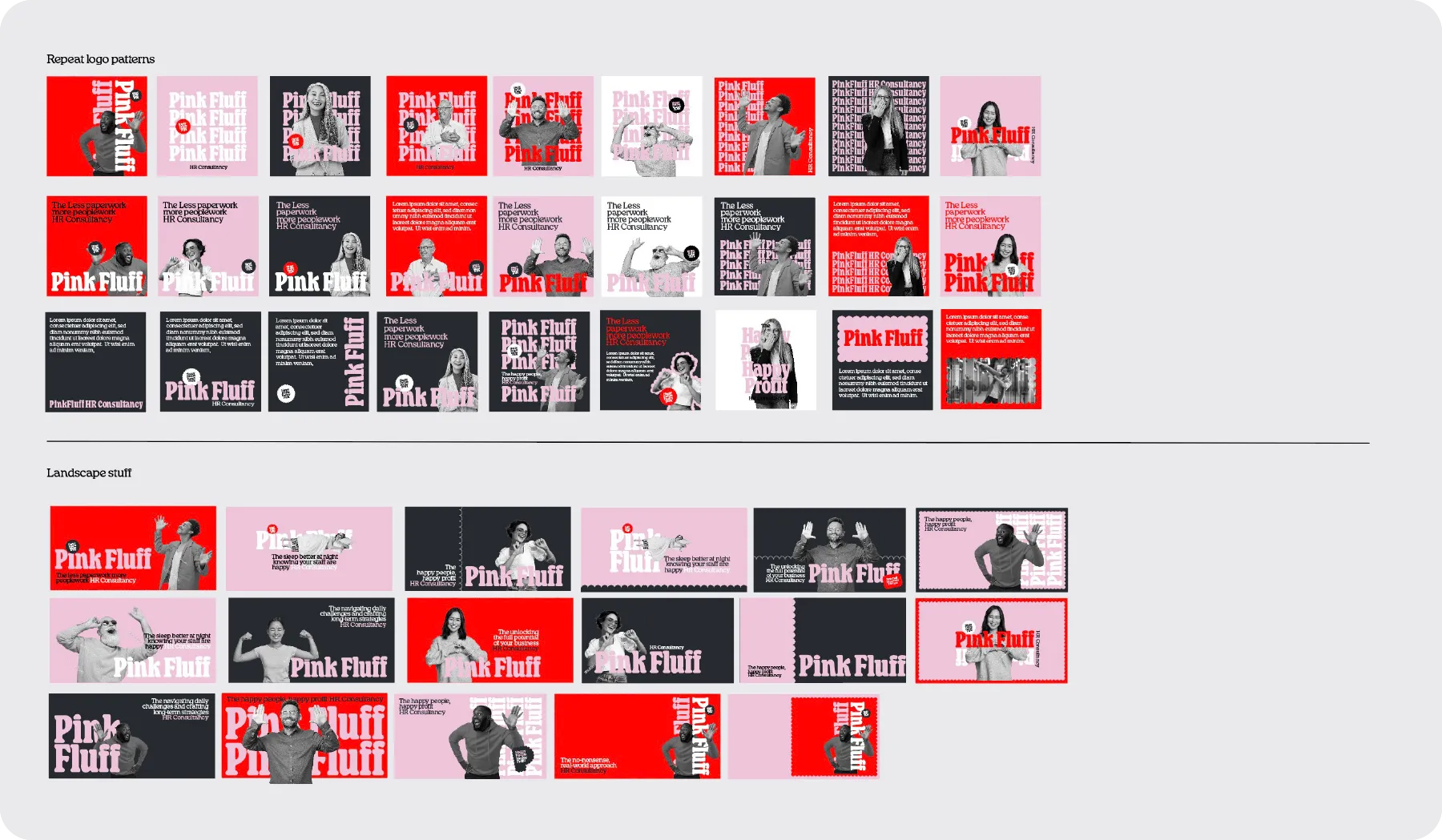
Then we brought the ingredients together as recipes.
Different combinations of the same building blocks used deliberately for different moments. Social posts, presentations, documents, web pages and internal comms.
Same logic. Different expressions.
Nothing is reinvented. Nothing drifts.
The brand stays calm, clear and recognisable even as it moves. That is the difference between a brand you have to remember and a brand you can simply use.
“The branding system Wonderment created, needed to work for us every single day, empowering us to be able to create our own content with confidence. By giving us all the ingredients and showing us the recipes, they've made everything feel seamless and straightforward. We can now use those ingredients in whatever way we choose, knowing the result will always feel cohesive and on brand. It’s an approach that’s not just effective, but affective. It’s helping us work faster while creating work that genuinely feels right.”
Andrew Halford , Director, Pink Fluff HR Consultancy
Ingredients and Recipes is not theory we admire from a distance. It is now the chosen way we approach branding projects at Wonderment.
Every project. Every time.
We define the ingredients with care. We agree what is always true and what can flex. We create recipes that guide, not restrict.
And we build brands that can live properly in the real world.
Not brands that need protecting. Brands that can be trusted.
And when clients stop asking, can we do this and start asking, which recipe should we use, that is when I know the brand is doing its job.
“Sean’s eyes shone when he understood why I create brand identities as ingredients and recipes. It makes it easier to be cohesive, stay fresh, unleashing creativity that actually works in execution to build a strong brand. Sean brought joyous expression to Rebrand Right and my brand.” Rachel Fairley Brand Fixer and Co author of Best-selling book, Rebrand Right
The real shift.
This approach does not make brands looser. It makes them stronger.
Because recognisability does not come from repeating the same execution. It comes from repeating the right ingredients.
So yes.
Out with the Brand Guideline Book and in with the Brand Recipe Book.
Not because structure does not matter. But because the right structure creates freedom.
That is the Rebrand Right shift.
And it is now baked into how we do things at Wonderment.
With clarity. With confidence. And just enough creative mischief to keep it joyful.


Subscribe to Wonderfuel
Your fortnightly spark of Strategic Joy™, landing in your inbox every Moanday morning. Because joy isn't a reward for getting through the week it's what gets you through it. No hacks. No homework. Just one idea engineered to mess with the gloom.